
You’re losing opportunities every time a great project comes and goes without being properly documented. The Construction Channel argues that “no story = lost value” and shows how ongoing video storytelling – jobsites, progress, and events – turns your projects into a sales, recruiting, and reputation-building asset.
Most firms still only capture a few staged still images at the end of a project. Meanwhile, their competitors are quietly building a dynamic videographic archive of stories that help them win work, attract talent, and deepen relationships with owners and partners. This blog explains why real construction storytelling matters, what kinds of stories move the needle, and why deploying a builder‑rooted media partner like The Construction Channel on your behalf is safer, easier, and more effective than trying to become a media company yourself.
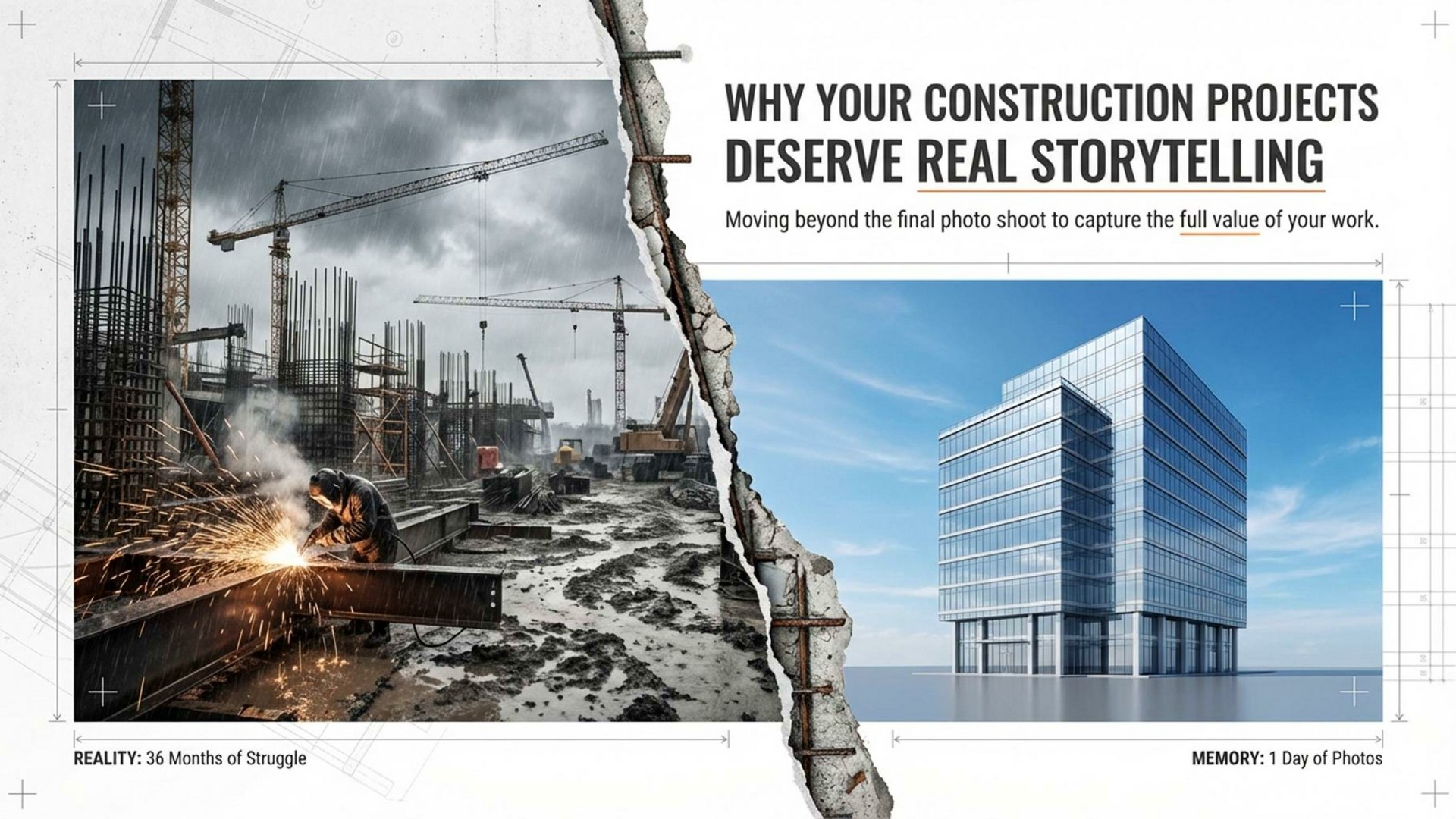
Are you really going to let your best projects disappear into a folder or a banal social media post with just a few photos?
You fight hard for years, submitting bid after bid and finally win a project. You navigate preconstruction, coordination, field challenges, and a hundred small crises that never make it into a press release. You deliver a building that will serve a community, a campus, or a client for decades.
Then, in many cases, the “documentation” consists of a rushed photo shoot at substantial completion, a few images dropped into a proposal deck, and maybe a short LinkedIn post that lives for forty‑eight hours and then vanishes down the feed forever.
After that, the story is gone.
No future client ever sees the late‑night decisions your team made. Future recruits can’t experience what it felt like to be on that job. The public never understands the massive, coordinated effort that it took to get from empty site to ribbon cutting. Ten years from now the building will still stand, but the people who made it happen will have moved on, and the memory of the work will exist only in scattered photos and internal anecdotes.
That’s the gap The Construction Channel exists to close. We believe your projects deserve more than a final photo shoot. They deserve real storytelling.
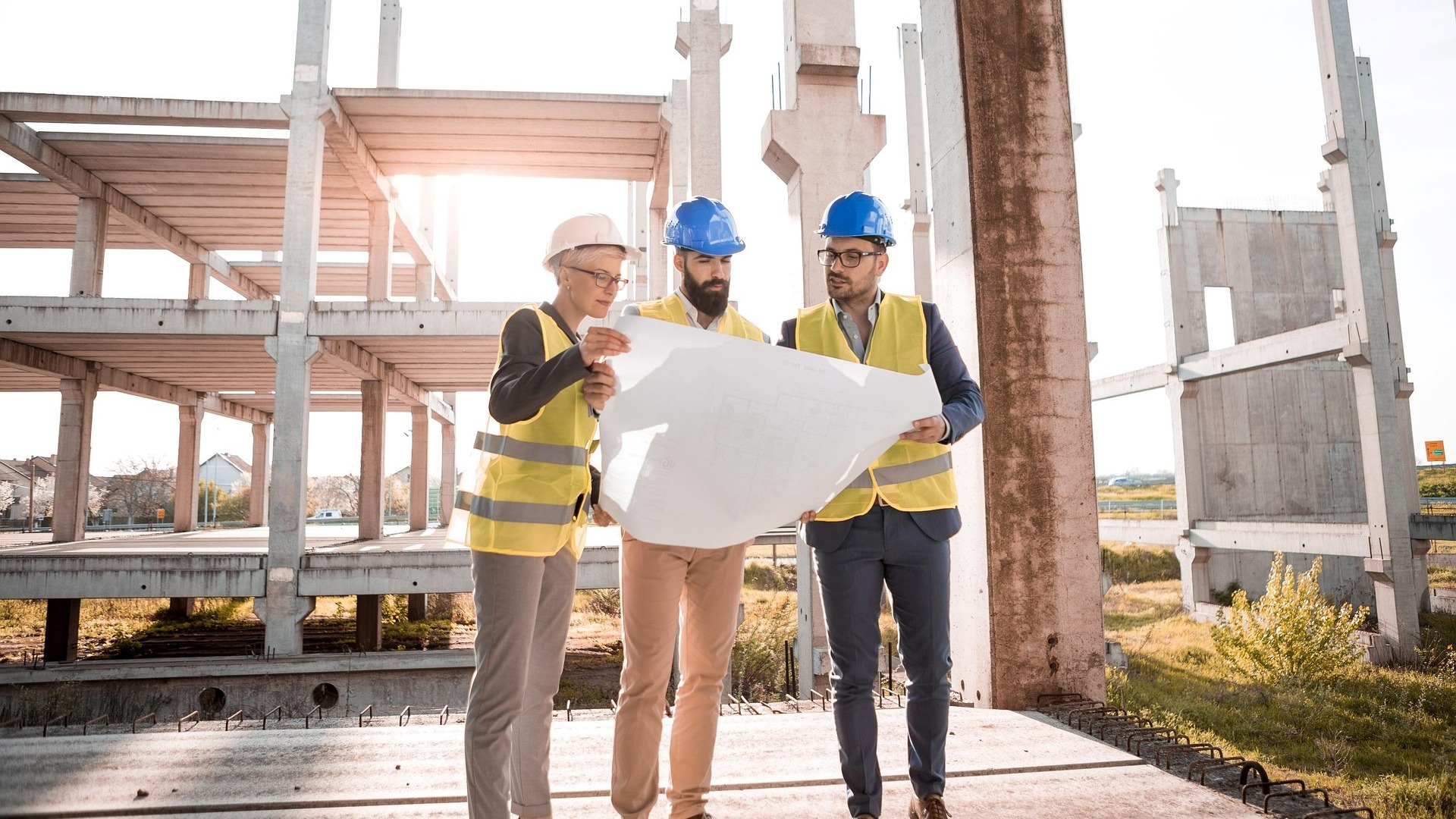
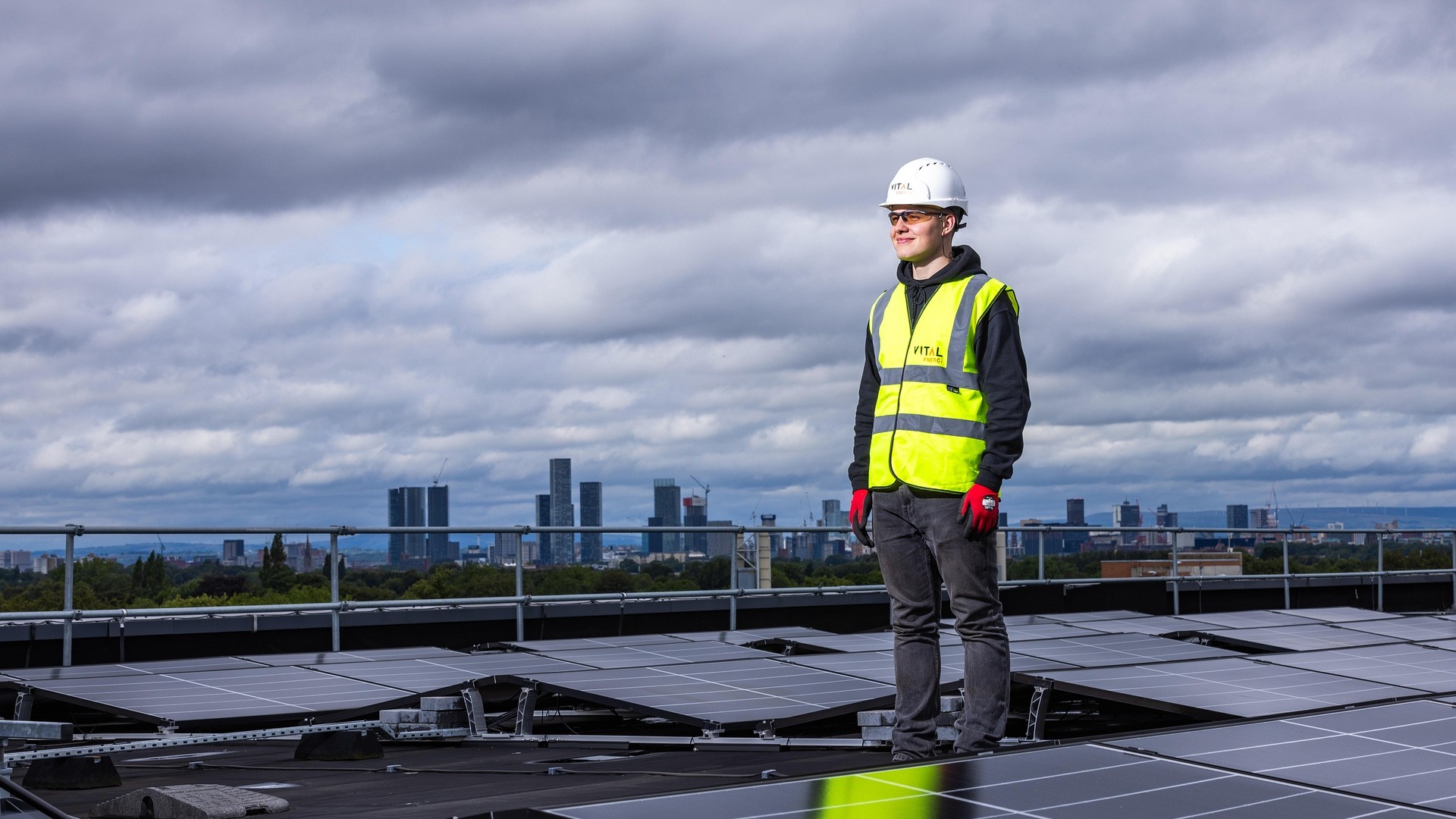
What do you actually lose when you don’t document the journey?
From the outside, storytelling can seem extraneous rather than vital – something you invest in if there’s a little budget left after everything else. From the inside, the cost of silence is much higher than it looks.
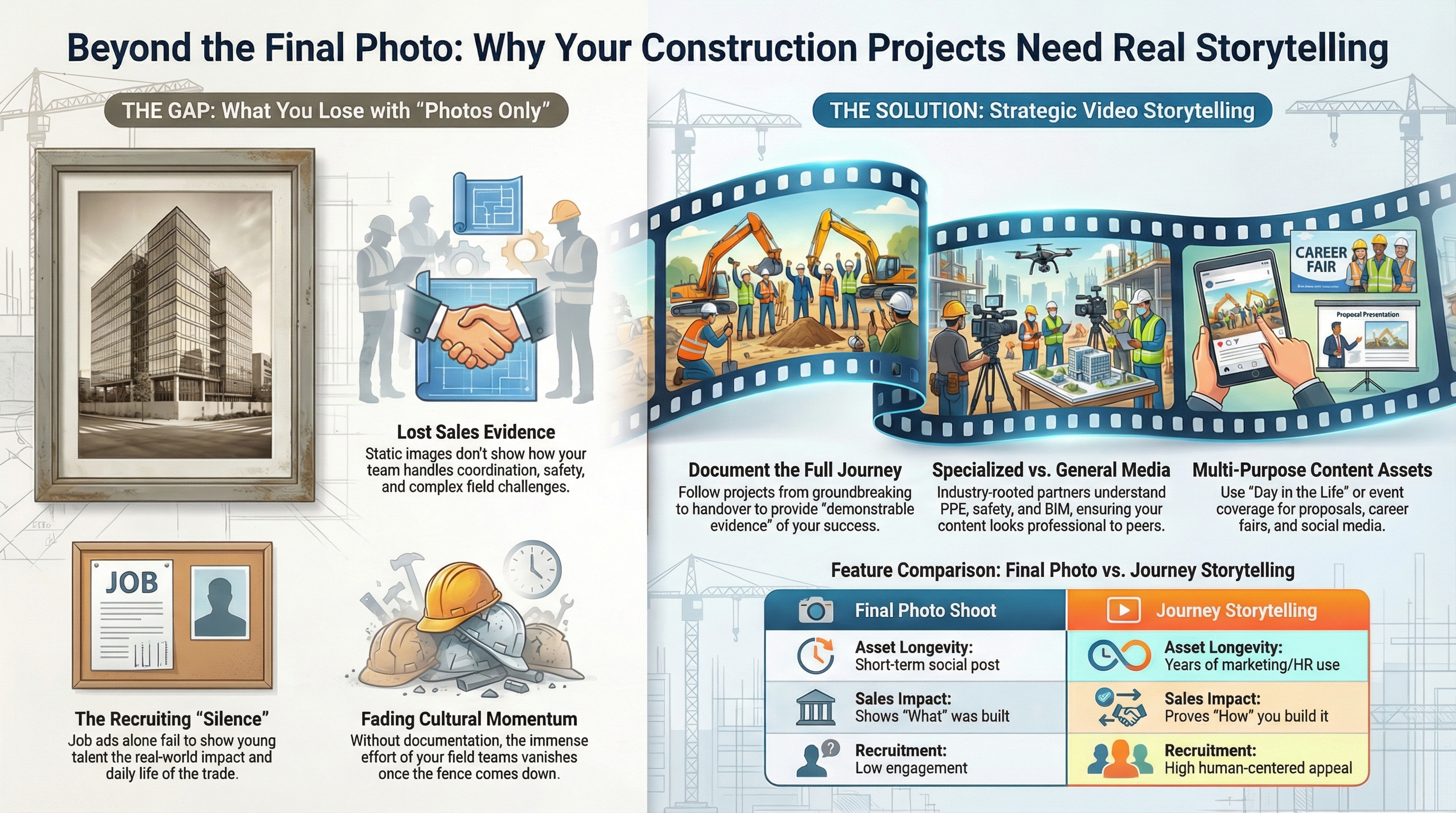
First, you lose a powerful sales asset. Owners and selection committees don’t just want to hear what you built; they want clear evidence of how your teams work under pressure, how you collaborate with trades and designers, and how you handle safety, schedule, and quality when contingencies arise. A well‑produced project story doesn’t just depict static shots of steel and concrete. It lets decision‑makers see your superintendents walking the job with the architect, your trade partners explaining how early coordination helped them avoid rework, and your project managers calmly talking through real challenges. When you walk into an interview with that kind of story backing your business, you’re not reciting talking points – you’re providing demonstrable evidence of past project success.
Second, you lose a recruiting and retention engine. Every leader in construction is thinking about workforce. The industry needs more people than ever, but young talent has countless employment options and very little exposure to what construction really is. Job ads and compensation tables alone rarely convince someone to choose an employer or a career trajectory. What does make a difference is seeing an apprentice reflect on their first year, a field engineer explain why they stayed, or a foreman describe how they moved up. When you document those stories on actual projects, you create a library you can feature at career fairs, in classrooms, and on careers pages for years, not weeks. That library quietly but consistently affirms, “This is a real path. This is what your life could look like here.”
Third, you lose cultural momentum inside your own company. Your teams put in enormous effort, often in conditions no one outside the fence line understands. When you film that work and share it internally, employees realize that leadership is attentive and appreciative. Long‑time employees gain something they can show their families: “This is what I do.” Younger staff see role models they can aspire to be. Culture isn’t built with slogans; it’s built with shared stories that people can point to and say, “That’s us.”
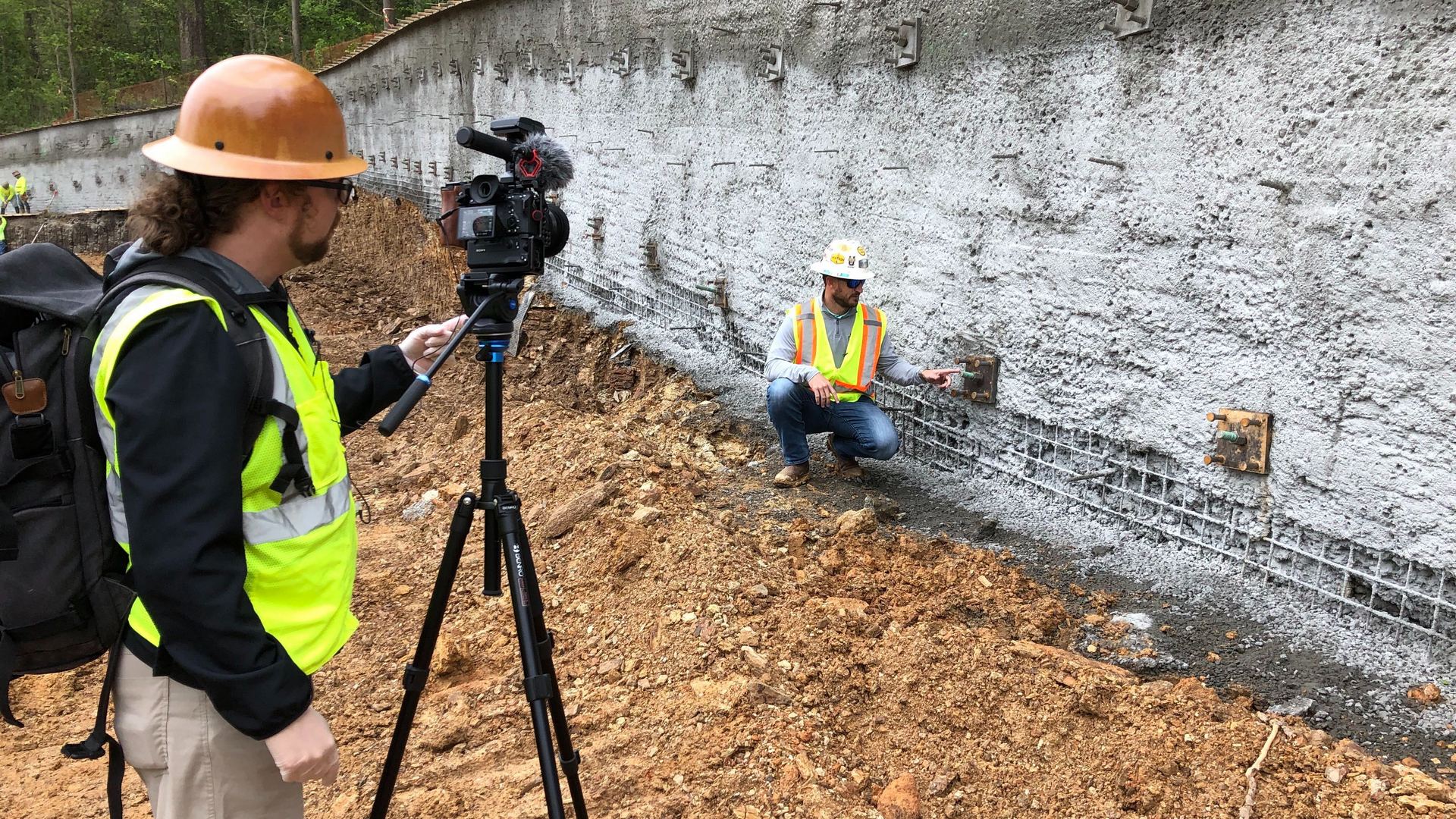
Why is construction storytelling different from regular video production?
You can hire a talented generic videographer and they will almost certainly produce something that superficially looks good. But construction isn’t just a generic backdrop. It has its own language, its own safety realities, its own rhythms and constraints. A videography team that doesn’t live in that world can easily miss what matters – or worse, misrepresent it.
That is why The Construction Channel was created. The company is led by Aaron Wright, who has more than two decades of experience in BIM, VDC, and construction technology. Our sister company, Construction Channel Design, spends its days in BIM coordination and field‑ready documentation. Our crews have logged thousands of hours on active jobsites, industrial plants, stadiums, hospitals, campuses, and complex mixed‑use projects.
Because of that background, we don’t walk onto your site thinking only about angles and lenses. We think about access, phasing, safety, and what will resound with both field leadership and owners. We know how to attend orientations, work in PPE, and move through a live job without getting in the way. We also know what makes your superintendents and project managers beam with pride, and how to capture it in a way that feels honest to them. For serious projects, that difference matters. A video that looks slick but shows questionable PPE, impossible sequences, or generic commentary might impress someone outside the industry. It will not impress your peers or your clients. Our goal is to deliver content that both audiences respect.
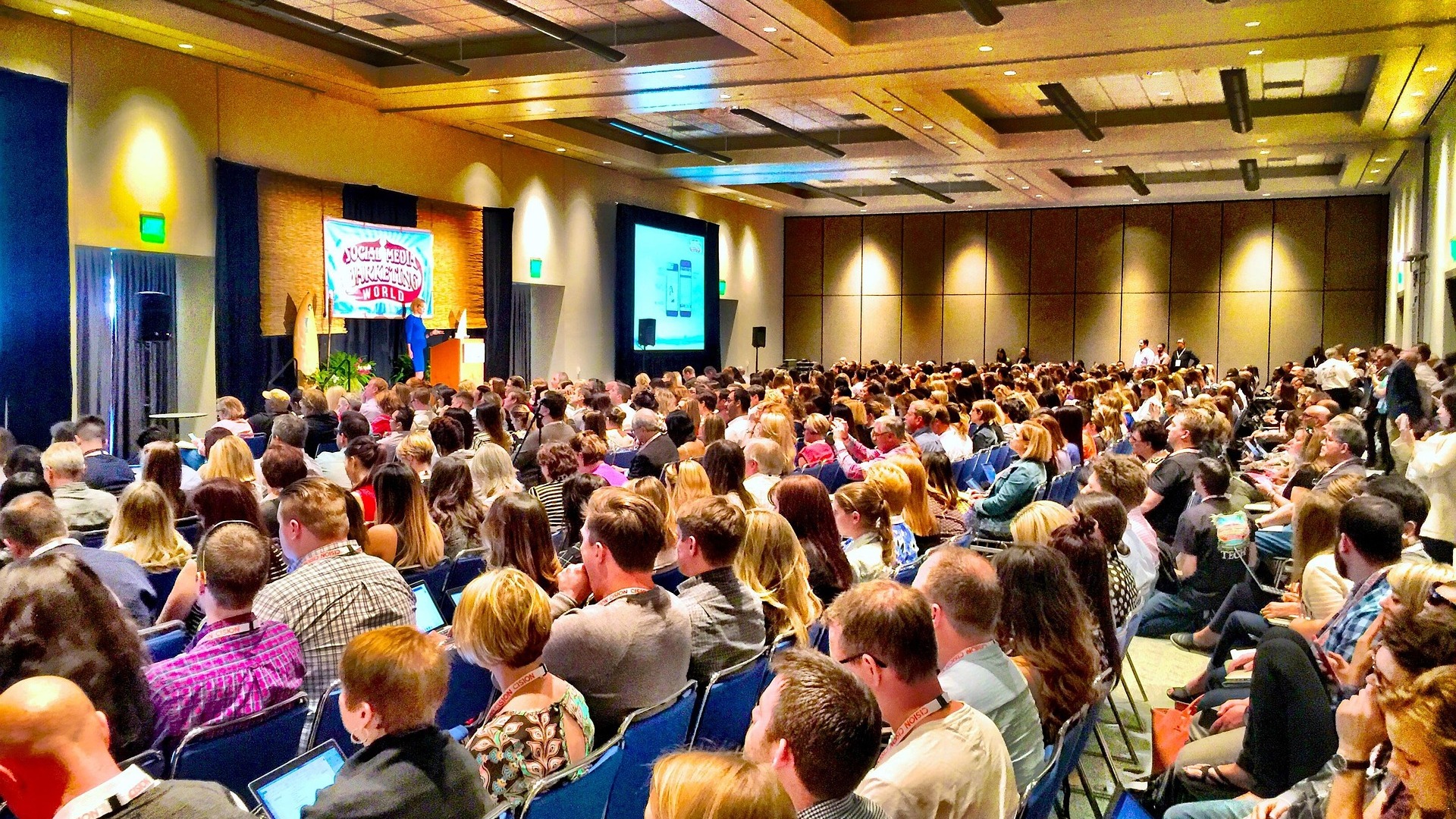
What does real construction storytelling look like?
Real storytelling goes far beyond a single “sizzle reel.” It can take several forms, depending on your goals.
One powerful format is a project journey series that follows a build from groundbreaking through topping out and handover. Instead of only seeing the finished lobby, viewers see steel rising, MEP rough‑in, complex lifts, rain delays, logistics challenges, and the creative solutions your teams bring to each phase. They hear directly from project managers, superintendents, trade foremen, owners, and community members about why the project matters.
Another format is the “day in the life” story. These short, human‑centered episodes might follow an apprentice through a typical shift or show how a superintendent starts the day, walks the site, and leads the team. They reveal how a project actually proceeds and what it feels like to work there, which is invaluable for recruiting and for building trust with owners who want to see who will be representing their firm on site.
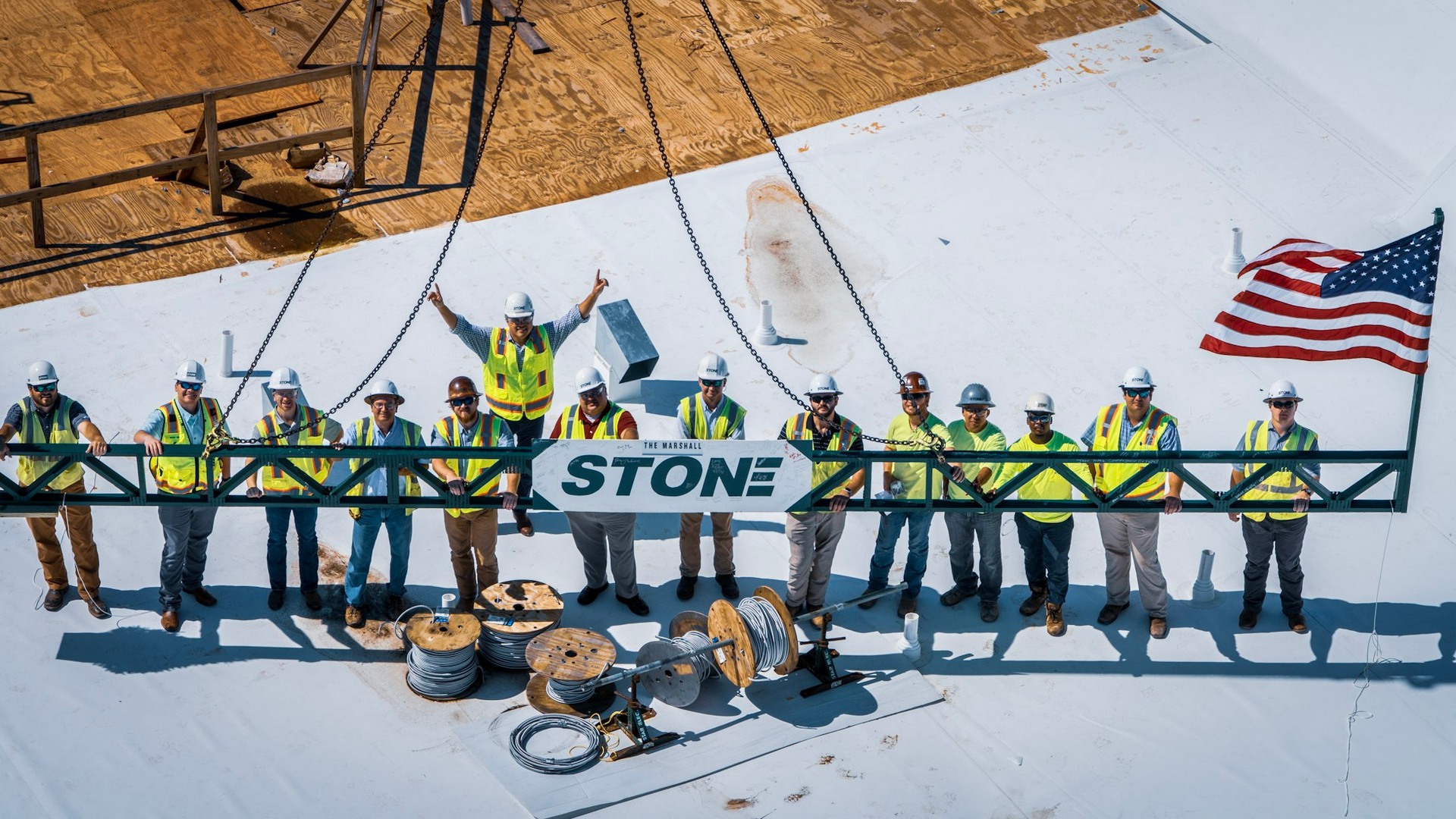
Event and conference coverage is another dimension. Safety summits, association meetings, topping‑out ceremonies, and workforce expos are packed with energy and real conversation. When we cover those events, we’re not just filming the stage. We are looking for sponsor impact, member pride, hands‑on demonstrations, and young people seeing possibilities they hadn’t considered before. Those events can then live on your website, in sponsor decks, in recruiting materials, and on social channels for months instead of a weekend.
Finally, there are brand and origin stories. Many firms have compelling histories – the founder who started in the field, the family that grew a small shop into a regional contractor, the architect who came back home to design civic buildings. When you tell that story well, you give prospective clients and employees a reason to choose you beyond low bid. You also give your own people a clearer sense of their firm’s lasting legacy – and their own.
“Can’t we just do this ourselves with phones and drones?”
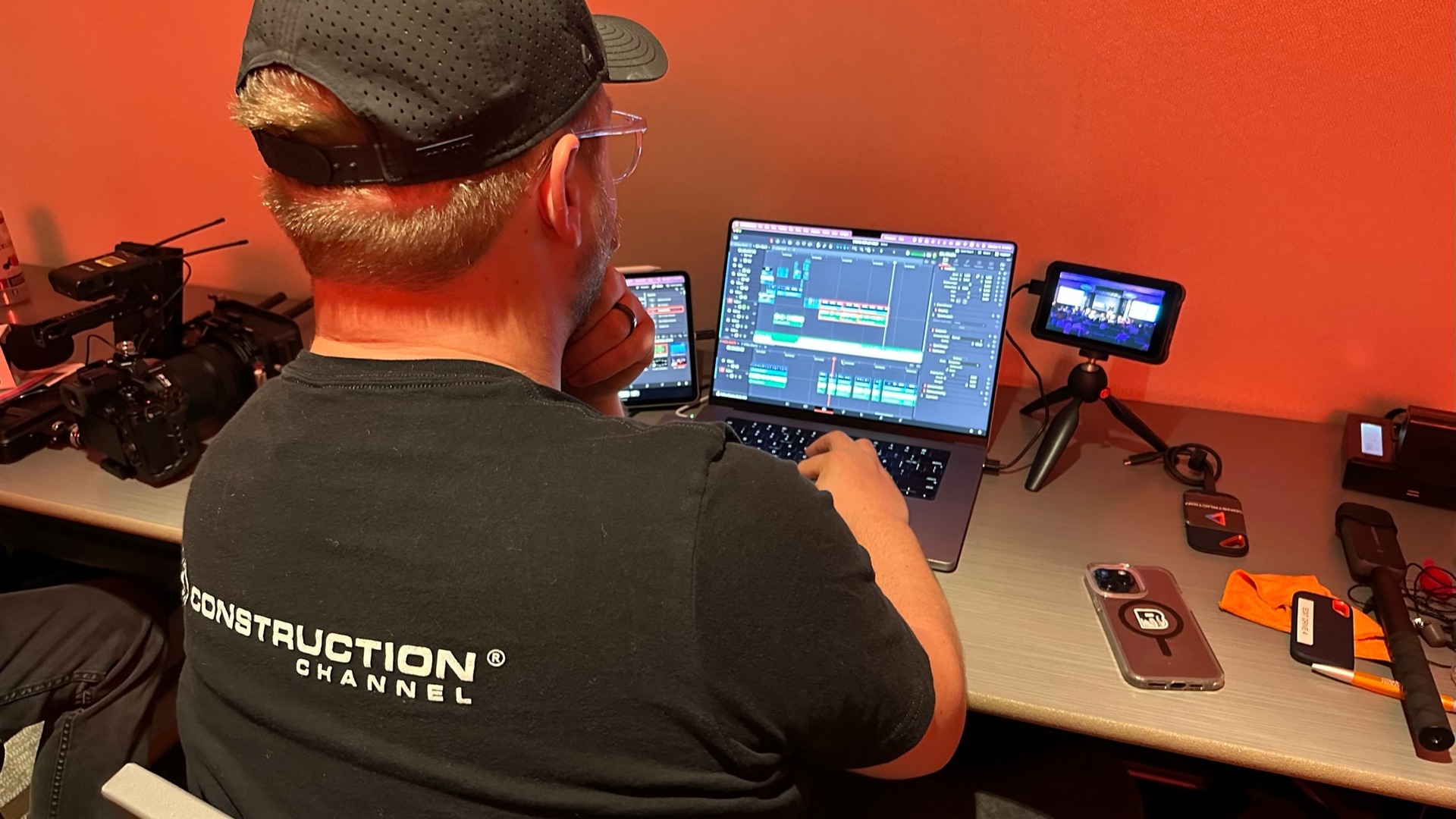
You can. Many companies do, at least for a while. Someone in marketing or operations becomes “the video person” on top of their real job. They shoot a few projects. They start cutting footage on nights and weekends. They drop clips into social feeds when they have time. And then the realities of their primary role encroach and detract from the quality of their videography.
Content gets stuck on SD cards and shared drives. Safety and access questions slow filming. Editing takes longer than anyone expected. Eventually the entire effort collapses into a handful of isolated videos and a feeling that “we tried that once and it didn’t work.”
The core problem is not a lack of talent; it is a lack of capacity and focus. Producing consistent, strategic, technically accurate content is its own job, one best executed by a team of professionals that understand the industry being depicted. This work requires planning, on‑site coordination, post‑production, and a clear understanding of how each piece will be used.
Partnering with The Construction Channel allows your teams to stay focused on building while we focus on documenting. We already know the constraints of your environment and the expectations of your audience. We think in terms of packages and reuse, not one‑off posts. And we deliver finished assets your marketing, HR, and leadership teams can put to work immediately.
What’s the next step if you want your next project to be seen?
You don’t need to start with an ambitious multi‑year series. The simplest starting point is often a single flagship project, a milestone event, or one story about a crew or leader who clearly represents your values.
From there, we help you identify the right angles, plan our time on site, and design a content package that supports business development, recruiting, internal culture, or all three. The stories are already playing out on your job sites every day. The question is whether anyone outside the fence will ever witness them.
If you’re ready for those stories to work for your brand long after substantial completion, then you’re ready for a consultation with us.