
Late-stage MEP clashes have a reputation in commercial construction. Everyone has a story. Everyone has felt the pain. Most teams also treat them as an expected cost of doing business, the kind of issue that rears its head when a project gets tight and the ceiling space gets crowded.
That normalization is expensive.
Late clashes are not just a coordination problem that appear during implementation. They are usually the result of decisions and assumptions that were left unresolved early, then finally collide with reality when the job can no longer absorb their impact on cost. By the time the clash shows up in the field, project leadership has already committed to schedule, procurement, and installation sequence. The cost is rarely limited to the change order line item. The job pays for late clashes through lost time, disruption of work, accelerated procurement, rework, and quality compromises that surface later as warranty calls and punch-list drag.
The true cost of late-stage clashes becomes clearer when it is broken into categories that reflect how projects actually lose money. That breakdown also makes the prevention strategy easier to understand, because it forces coordination to be evaluated the same way as field execution: by predictability, buildability, and risk reduction.
What qualifies as a “late-stage” MEP clash?
Not every clash is a crisis. Unearthing clashes early is a hallmark of successful coordination. Problems only arise when clashes are discovered late in the coordination process.
A clash becomes “late-stage” when it is discovered after the project has already crossed one or more points of commitment. Those points vary by job, but they usually include some combination of: major procurement already released, sleeves and embeds already placed, framing already underway, prefabrication already in progress, above-ceiling rough-in already started, or access already restricted by other completed work.
At that point, even a small routing change can create a ripple that impacts multiple scopes. Job planners no longer have the option of solving the clash with a simple paper reroute request. The problem can now only be solved by additional labor, schedule tradeoffs, and work disruption.
Illustrative example: A conflict between a large duct run and a major conduit bank is discovered after the ceiling grid has started in adjacent areas and the mechanical contractor has already installed hangers. The model can be updated quickly, but the jobsite solution requires removing already installed work, changing hanger locations, coordinating access with other trades, and catching up to a schedule that is not slowing down.
That is the difference between recognizing an early clash and a late clash. The geometry may be similar, but the cost profile is not.
Late-stage clashes aren’t expensive because the geometry is hard. They’re expensive because the job already committed. Once the ceiling starts closing in, the project stops “coordinating” and starts paying.
The visible cost: change orders and direct rework
The easiest part of the cost to quantify is the part that gets documented. This includes direct rework labor, material scrap, and formal change orders associated with redesign or relocation. These numbers show up on paper, and they matter, but they are rarely the full story of the economic impact of late-stage MEP clashes.
Direct costs often include removing installed work, reinstalling with new routing, acquiring additional fittings or supports, and paying for labor to cover the inevitable backtracking. If prefabricated sections have already been rendered, the waste can be even more concentrated: a spool that was built to match a model assumption may not be field-correct once the conflict is discovered.
Direct rework cost is painful, but projects can sometimes absorb it if the schedule has float and the scope is isolated. What makes late clashes truly damaging is the hidden, undocumented costs that accompanies them.
If all you count is the change order, you’re missing the real bill. The real bill is the days of churn that follow—stacked trades, lost rhythm, overtime, and a job that never quite catches up.

The hidden cost categories that multiply the damage
Late-stage clashes hurt projects because they disrupt systems that are designed around flow. Construction schedules assume predictable sequencing. Trade productivity assumes access and continuity. Procurement assumes stable dimensions and locations. When a clash forces a change late, the job loses money in several ways simultaneously.
1. Schedule drag and the cost of lost sequence
The most expensive schedule impact is rarely the days added to the overall completion date. It is the disruption to the sequence that keeps multiple crews productive and on schedule. When a clash blocks one trade, it often blocks several. Work shifts from planned installation to workarounds, waiting, and resequencing.
This creates idle time that may not be tracked as “rework” but still costs real dollars. It also creates compression. When the job loses time, the schedule rarely expands. The job tries to catch up by stacking trades tighter, working longer hours, or pushing work into less efficient windows.
Illustrative example: A clash requires rerouting a pipe run in a corridor. The fix itself is a day of work, but the corridor is also a primary access path for multiple crews. The reroute forces rescheduling of fire protection installation, ceiling grid work, and inspection timing. Even if the mechanical fix is quick, the coordination ripple forces schedule adjustment across scopes.
The cost shows up as reduced productivity and compromises in quality more than as a single big invoice.
2. General conditions and overhead creep
When late clashes slow a project down, general conditions increase. Supervision time, temporary facilities, safety management, equipment rentals, and project management overhead all grow more expensive as the job stretches or becomes more complex to manage. These costs are often framed as “just part of the job,” but they represent real margin erosion.
Even when the overall completion date does not move, late clashes can increase overhead by increasing the effort required to manage the job: more meetings, more RFIs, more inspections, more coordination time spent untangling avoidable conflicts.
3. Labor inefficiency and crew churn
Field productivity is sensitive to continuity. Crews make money when they can install work in a predictable, uninterrupted rhythm. Late clashes disrupt that rhythm and compromise the crews’ profit margins and even morale.
Instead of installing, crews spend time moving, waiting, tearing out, reinstalling, or working around incomplete areas. Work becomes fragmented. Fragmentation increases labor hours per unit installed. It also elevates frustration and fatigue, which affects work quality and job safety.
This is where the actual cost of a late-stage clash can quietly double. A clash might require four hours of rework, but the fragmented work environment it creates can reduce productivity for days.
4. Procurement disruption and expediting
Late changes often force procurement changes. A reroute may require different fittings, supports, sleeves, or prefabricated components. When lead times are long, the job expedites. Expediting costs money directly, but it also forces procurement teams to spend time solving crises instead of managing planned deliveries.
In prefabrication-heavy workflows, late clashes are especially damaging because they can invalidate shop work already completed or in progress. The model may be updated instantly, but the fabrication and delivery pipeline costs time and money to reroute.
5. Quality risk, inspections, and downstream punch-list impacts
Late-stage fixes tend to be made under pressure. Pressure often result in shortcuts. Shortcuts create quality issues. Quality issues create punch-list and warranty costs.
A rushed reroute might work, but it may not be as clean, accessible, or maintainable as the original schedule. It may increase congestion, limit service access or complicate insulation and firestopping. It may pass today’s inspection but create tomorrow’s maintenance issue.
This cost is tangible even when it does not appear as a change order. It appears later as corrective work, strained owner relationships, and a final closeout that drags.
Late clashes hit you five ways at once: they break sequence, chew up labor, increase overhead, create procurement chaos, and push the field into “make it work” mode. That’s why they’re so expensive.
A practical way to frame ROI: what would it save to prevent this earlier?
Coordination ROI is often discussed in abstract terms. A more useful approach is to compare the cost of early prevention to the cost of late-stage correction using categories that reflect real project impacts.
A proactive coordination investment generally includes VDC labor, trade partner time, modeling and clash management effort, and coordination facilitation. Those costs are more visible and often questioned because they occur early, when budgets feel tighter and schedule pressure is rising.
Late-stage clash costs are often more substantial, but are spread across multiple buckets: labor inefficiency, overtime, lost sequence, overhead creep, expediting, and downstream quality impacts. Because the costs are distributed, they are easier to underestimate.
Illustrative example: A project invests in deeper preconstruction coordination for high-risk zones—mechanical rooms, shafts, and main corridors—adding coordination sessions and requiring earlier trade input. The added cost is measurable and occurs before installation begins. Without that investment, the job experiences a series of late clashes that create rework, overtime, and schedule compression. Even if no single change order is catastrophic, the combined impact consumes more dollars than the early coordination investment would have.
The ROI is not hypothetical. It is the difference between planned effort and potentially multiple unplanned disruptions.
Coordination costs money early. Late clashes cost money when you can’t afford it. The ROI isn’t a mystery—it’s the difference between planned effort and emergency effort.
Why late-stage clashes happen: the root causes that repeat
Late clashes are often attributed to “complexity.” Complexity can result in clashes, but it is rarely the sole reason. Most late clashes trace back to a smaller set of preventable causes.
1. Coordination starts after commitments are made
If coordination begins after procurement releases or after prefabrication decisions are locked, the job is already exposed to higher costs and compromised quality. It becomes difficult to adjust routing without causing waste.
2. Trade involvement arrives late or uneven
The quality of coordination depends on who is at the table and when. If key trades are not engaged early enough, the model may carry assumptions that are later invalidated. If one trade is highly detailed and another is conceptual, the model can look coordinated while still containing scope gaps.
3. Clash detection is treated as the finish line
A clash-free model does not guarantee buildability. Late clashes can occur because constructability and sequence were not validated, even though the geometry cleared.
4. Scope boundaries and ownership are not explicit
Many clashes are not purely geometric; they are scope conflicts. Who owns the sleeve? Who owns the opening? Who owns the support? If ownership is unclear, issues persist until they become field problems.
5. Inputs change, but the coordination process does not absorb change fast enough
Projects change. Equipment changes. Architecture shifts. Structural adjustments happen. The coordination system must be able to detect and process change quickly. When it cannot, coordination falls behind and late clashes become inevitable.
Late clashes happen when the project lets decisions drift. It’s not bad luck. It’s missed gates, missing owners, and assumptions that stayed alive too long.
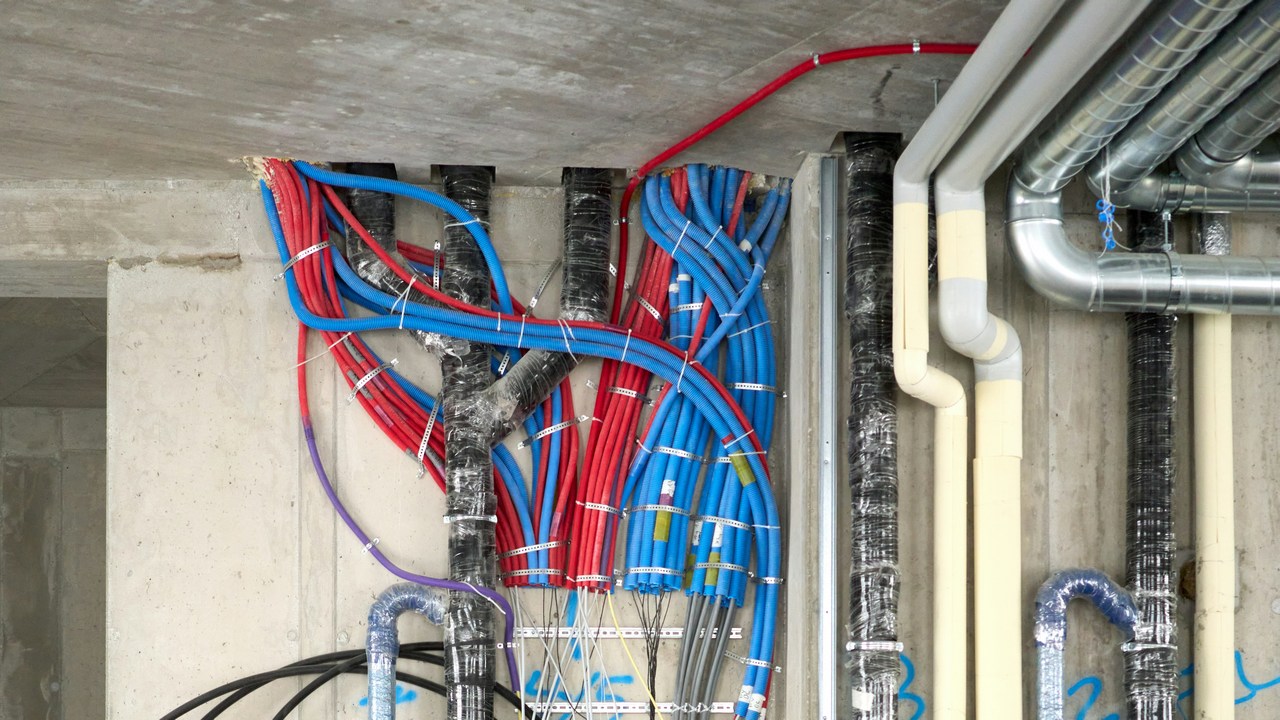
The prevention side: coordination discipline that reduces late-stage clashes
Preventing late-stage clashes does not require perfection. It requires discipline, clear threshold, and attention to the zones where the project is most vulnerable.
1. Establish coordination “commitment gates” tied to procurement and installation milestones
One of the most effective prevention strategies is aligning coordination milestones with commitment milestones. In practice, this means defining points where certain areas or systems cannot proceed to procurement or prefabrication until coordination conditions are met.
Those conditions should go beyond “clash-free.” They should include decisions that matter in the field: verified clearances, identified sleeves and penetrations, defined support strategies where needed, and explicit documentation of any assumptions that remain.
A gate is valuable because it forces earlier decision-making. It also creates accountability: if a scope wants to proceed without meeting the gate, the risk becomes explicit rather than hidden.
2. Prioritize high-risk zones instead of attempting uniform depth everywhere
Not every part of a job needs the same intensity of coordination. High-risk zones—mechanical rooms, shafts, congested corridors, and major above-ceiling runs—deserve deeper validation because the cost of late change is high. Lower-risk zones can often be coordinated with lighter effort without creating major exposure.
This approach does not increase coordination time to excessive levels. It strategically allocates coordination time where it can offset the most future cost.
3. Require early trade input for constructability and sequence, not just routing
Trade involvement is most valuable when it informs buildability decisions, not just geometry. Install sequencing, access constraints, hanger strategy feasibility, and realistic tolerance expectations are field-driven insights that significantly reduce late-stage surprises.
Early involvement does not necessarily mean more meetings. It means targeted requests for feedback at the points where decisions create long-term consequences.
4. Standardize clash management so issues move to closure reliably
Many teams run clash detection, but fewer teams manage clash resolution with the same discipline. A repeatable clash management system includes consistent naming and tagging, clear ownership, defined response expectations, and closure verification. Without those requirements, issues can appear “handled” while remaining unresolved in practice.
This is also where project leadership support matters. Coordination is easier to sustain when meeting outcomes are enforced and when unresolved issues carry visible risk, not silent delay.
5. Maintain a change-management rhythm that prevents drift
Late clashes often occur because the model and the job drift apart. A disciplined change rhythm—regular version comparisons, clear communication of alterations, and targeted revalidation of impacted zones—contains that drift.
The goal is not to prevent change. It is to keep the coordination system responsive enough that changes do not become field surprises.
The fix is boring on purpose: gates, ownership, closure rules, and change discipline. That’s what keeps the field from being the first place a conflict becomes “real.”
Conclusion: late clashes are costly because they arrive when the job has the least flexibility
A late-stage MEP clash is expensive because it forces the project to spend its way out of a problem at a time when that is the only option for completion. The job has already committed to procurement and sequence. The ceiling space is congested. Access is limited. The schedule is tight. The team’s choices are no longer cheap.
That is why the “true cost” of late clashes is larger than a change order. It includes disruption, overhead, inefficiency, expediting, and quality risk. It also explains why proactive coordination undeniably delivers ROI even when it feels like an added cost early. The investment allows for addressing problems when they are still inexpensive to solve.
Preventing late clashes is not about pursuing a perfect model. It is about building a coordination system that forces critical decisions earlier, targets high-risk zones with deeper validation, and maintains enough discipline that issues are resolved well before the field is forced into costly improvisation.
Late clashes are expensive because they show up when the job can’t bend anymore. Prevent them early, and the project stays predictable. Let them slip, and you’ll pay for it in overtime and churn.
CONTACT US if you would like to talk about this with us.