
A clash-free model looks good on a screen. It looks even better in a coordination meeting when every trade can point to their system, everything routes cleanly, and the report comes back “clear.” In that moment, it is tempting to believe the hard part is finished and the project is on track for swift completion.
Then the job hits the field.
Hangers don’t land where the model presumed them to land. Access that looked “fine” in a view becomes impossible with lifts and other trades clogging the way. A prefabricated rack shows up slightly out of square because the building isn’t perfectly square. A duct run that technically clears a beam in the software view no longer does so when insulated and fireproofed, and the crew has to get hands and tools into the space. The digital model looked flawless, but the realities of installation becomes problematic.
That disconnect is the BIM-to-reality gap. It does not happen because BIM is ineffective. It happens because BIM is often treated as a representation of the project rather than a tool that must be continuously translated to account for field constraints. A model can be accurate and still be unbuildable. Coordination can be “complete” and still be missing the information crews actually need to install confidently.
Closing that gap is not primarily a software issue. It is a coordination discipline issue. It requires a different definition of done—one that considers constructability, tolerance, access, and sequence, not just geometry.
Coordination has a real cost. It costs time and money. That’s exactly why “virtual perfection everywhere” is the wrong target—buildability where it counts is the target.
Why clash-free models still create field problems
A common misconception is that clash detection is the same thing as constructability. Clash detection can confirm that two modeled objects do not occupy the same space. It cannot confirm that the installation is practical, safe, accessible, or sequenced in a way that allows completion of the job.
Most field problems arise in the space between “it fits” and “it installs.” That space includes tolerances, insulation thickness, hanger strategy, clearances for tools, laydown and material movement, access for maintenance, and the inevitable deviations that show up in real construction. BIM environments are often built around idealized assumptions, while the field mandates managing imperfect conditions.
A second misunderstanding is that models represent the same level of certainty across all systems. In practice, different trades and scopes reach “final” at different times, and they carry different levels of detail. A model can look cohesive while still containing areas where decisions were deferred, scopes were assumed, or accurate geometric dimensions were represented by placeholder estimates. Those placeholders often survive longer than anyone intends, but are frequently exposed in the field.
Another problem that flows from clash-free models is communication friction between the VDC environment and the jobsite environment. Field leaders are accountable for execution, but they are rarely given model outputs in a format that assists field decision-making. Meanwhile, VDC teams are accountable for coordination, but they may not receive reliable field feedback early enough to influence how the model evolves.
The result is predictable: the model becomes “the plan,” the field becomes “the reality,” and the project spends time and money navigating the contrast between the two. VDC coordinators often spend too much time on non-issues that waste time and money.
Clash detection proves geometry. It doesn’t prove install. A crew can’t hang a model. They hang real duct, real pipe, and real supports in a real ceiling.
Where the BIM-to-reality gap actually starts
The gap usually starts earlier than teams want to admit. It often begins during design development, when key misbegotten assumptions become embedded in the model without being tested against installation realities.
One common source of friction is assumptions about access. In coordination reviews, it is easy to focus on fit and routing while underweighting the berth required for systems installation. A run may clear structurally and still be a nightmare to hang because of lift access, interference with framing, or the need for multiple trade crews working in the same zone. The model does not “show” those potential conflicts unless the coordination process deliberately checks for them.
Another common issue is tolerance and clearance assumptions. Digital coordination often depicts systems in ideal shapes and dimensions. The field presents significant deviations in the form of insulation, hangers, seismic bracing, sleeves, firestopping, and the realities of fabrication variance and installation variance. A one-inch clearance in a model may be a zero-inch clearance in the field. The model is technically correct, but it fails the buildability test.
Sequence assumptions are another quiet source of failure. Systems are modeled as if they can all appear in place in an optimized order. In the field, the order is constrained by lead times, crew availability, access, and the practical need to get work done in a way that avoids rework. If coordination does not account for early sequencing, work bogs down in the field as sequence-related snags surface later.
Illustrative example: A corridor ceiling space is coordinated and clears in the model. The model review focuses on duct and pipe routing and passes clash detection. In the field, the duct install is scheduled first, but the hanger strategy requires attachment points that are blocked once the duct is set. The duct technically fits, but the installation order creates a conflict. The model never violated geometric rules, but coordination did not validate installation logic.
This is the core issue: the model can be perfect at describing the design and still fail to account for the build.
Assumptions aren’t a sin. Untracked assumptions are. If it’s a placeholder, label it, own it, and put a date on when it becomes real.
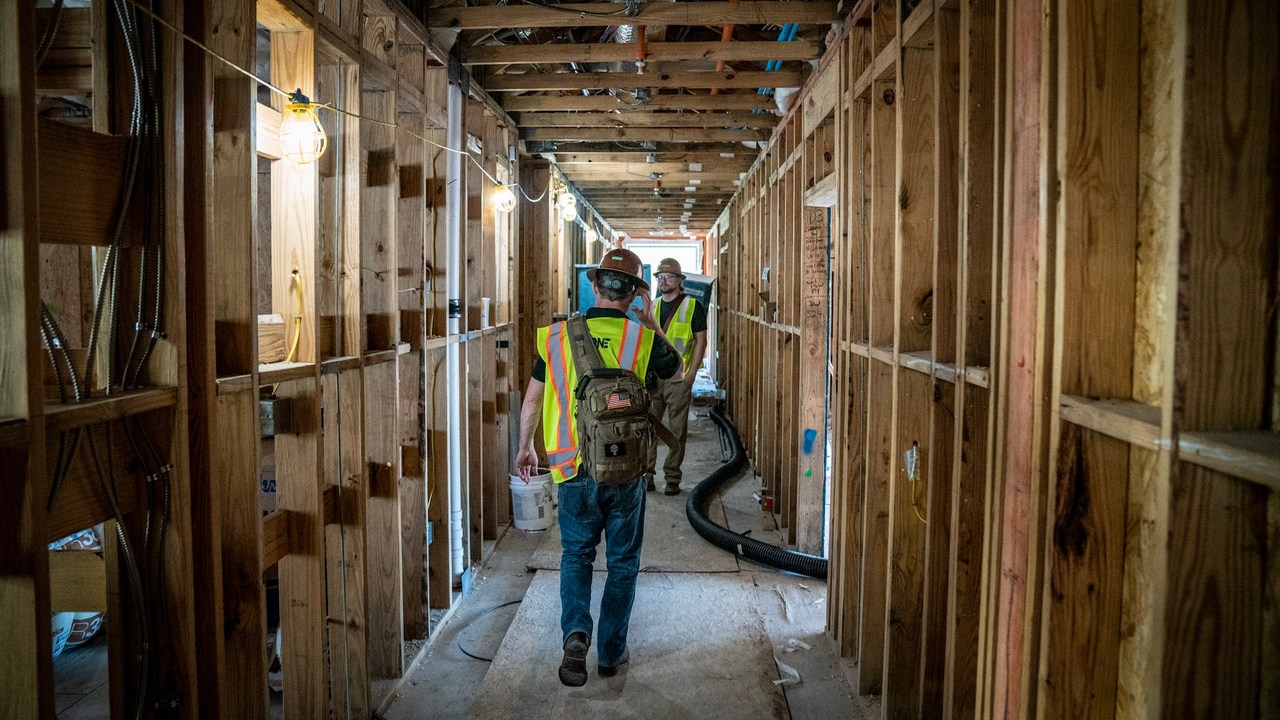
The difference between “model accurate” and “field-buildable”
Field-buildable coordination treats installation as part of the design process, not as something that happens after the model is finalized. It evaluates the model not only for collisions, but for whether or not design allows crews to execute with predictable effort and predictable outcomes.
That starts with defining “buildable” in practical terms. Buildability coordination includes clearance for tools and labor, not just space between objects. It includes defined hanger and support strategies in congested zones. It includes the realistic representation of insulation, seismic requirements, and access needs. It includes explicit decisions about what must be prefabricated versus assembled in place. It also includes the details field labor needs to understand intent: where the critical dimensions are, where tolerances are tight, and where flexibility exists.
This does not mean every model must become an as-built digital twin before construction begins. It means that the coordination process must recognize which areas are high-risk and require deeper constructability validation, and which areas can remain narrower without creating field exposure.
Not everything must be modeled. The model is a tool, not a religion. Spend your modeling effort where the job will hurt you if you’re wrong.
Practices that close the gap without slowing everything down
A common objection to constructability-heavy coordination is the pressure such planning places on the schedule.. Preconstruction timelines are compressed. Decisions arrive late. Everyone is trying to move. The concern is that adding field validation steps will slow coordination to the point that it becomes unusable.
In practice, constructability planning often expedites project completion when the process is structured correctly. Time spent validating constructability upstream usually reduces downstream disruption, because the job spends less time reacting to avoidable conflicts. The key is to apply deeper validation where it matters most, rather than applying it uniformly across the model.
1. Start by identifying “field risk zones” early
Not every stage of a project carries the same risk. The BIM-to-reality gap typically becomes expensive in predictable places: mechanical rooms, shafts, congested corridors, tight ceiling plenums, areas with heavy fire protection density, areas with critical schedule sequencing, and transitions between systems.
Marking these zones early changes coordination behavior. It signals where the team must verify buildability, support strategies, access, and sequence, rather than relying on geometry alone. It also helps leadership understand where the coordination effort should be concentrated.
Illustrative example: A project defines three tiers of coordination areas. Tier 1 zones include mechanical rooms and major riser corridors and require deeper constructability checks and field input. Tier 2 zones receive standard clash detection plus clearance checks. Tier 3 zones receive basic, streamlined coordination. The result is not “more coordination everywhere,” but more targeted coordination where the field risk is highest.
Model the hard parts like you mean it. Don’t burn the budget over-modeling the easy parts just to feel thorough.
2. Build constructability checks into the coordination rhythm
Constructability checks do not need to be heavyweight, but they must be consistent. That means integrating constructability into a routine part of coordination rather than a special event specific to select projects.
Practical checks include confirming hanger strategy feasibility in congested zones, confirming clearances that account for insulation and access, verifying sleeves and penetrations where coordination frequently fails, and confirming that install sequencing is compatible with the current deliverable schedule.. These checks can be structured as part of weekly coordination in the same way as clash reviews.
The goal is not to model installation of every nut and bolt, but to prevent predictable installation pain from becoming an emergency.
3. Make assumptions explicit and time-bound
One of the main reasons field teams are skeptical of models is that assumptions are rarely explicitly labeled as such. A routing decision may be “temporary,” but if it is not flagged and revisited, it becomes final. A clearance may be “tight but acceptable,” but if it is not documented as a tolerance-critical area, execution will be compromised in the field.
A practical solution is to flag assumptions as tracked items rather than silently embedding them in design. Assumptions should be labeled, assigned, and given a deadline for confirmation. This keeps the model honest and reduces the chance that placeholder geometry becomes permanent by default.
Illustrative example: During coordination, a piping route is placed with a placeholder elevation pending final equipment selection. The issue is logged as “temporary,” assigned an owner, and given a date by which it must be confirmed. The team avoids the common failure where a temporary route becomes final simply because the schedule moved on.
Placeholders are fine. Uncontrolled placeholders are how you end up building the wrong thing and paying for it twice.
4. Translate model intent into field-usable information
Even when a model is well coordinated, field execution can still suffer if the output is not translated. Many field teams are not considering model views while they work. They are working from sheets, details, dimensions, and install directions. If model intent is not represented in a format that supports installation, the model becomes a reference rather than an execution tool.
Translation can take several forms: curated model views for specific zones, coordination sheets that highlight critical dimensions, installation notes tied to model locations, and clearly defined “do not deviate” constraints versus areas with flexibility. The key is that the field should not have to interpret the model’s intent under time pressure; the coordination process should package intent in a form that facilitates installation.
This is also where coordination teams often earn credibility. The field does not need more information. It needs the right information.
If the crew has to interpret the model in the middle of a busy day, you’re already late. Package the intent so the field can execute it.
5. Pull field input early, but keep it targeted
The field does not need to attend every coordination meeting. However, field input is often essential at critical junctures, particularly in high-risk zones and for sequence-driven decisions. The most effective approach is targeted involvement: notify field leaders when decisions affect installation realities, and keep the feedback loop tight.
Field input is particularly valuable for confirming access constraints, preferred installation sequencing, hanger and support feasibility, and the practicality of prefabrication plans. When field input arrives after the model is “done,” it is treated as a rework request. When it arrives before the model is finalized, it becomes a design constraint that can be intentionally coordinated.
You don’t need the superintendent in every meeting. You need the superintendent when the decision you’re about to make will decide whether the install is smooth or miserable.
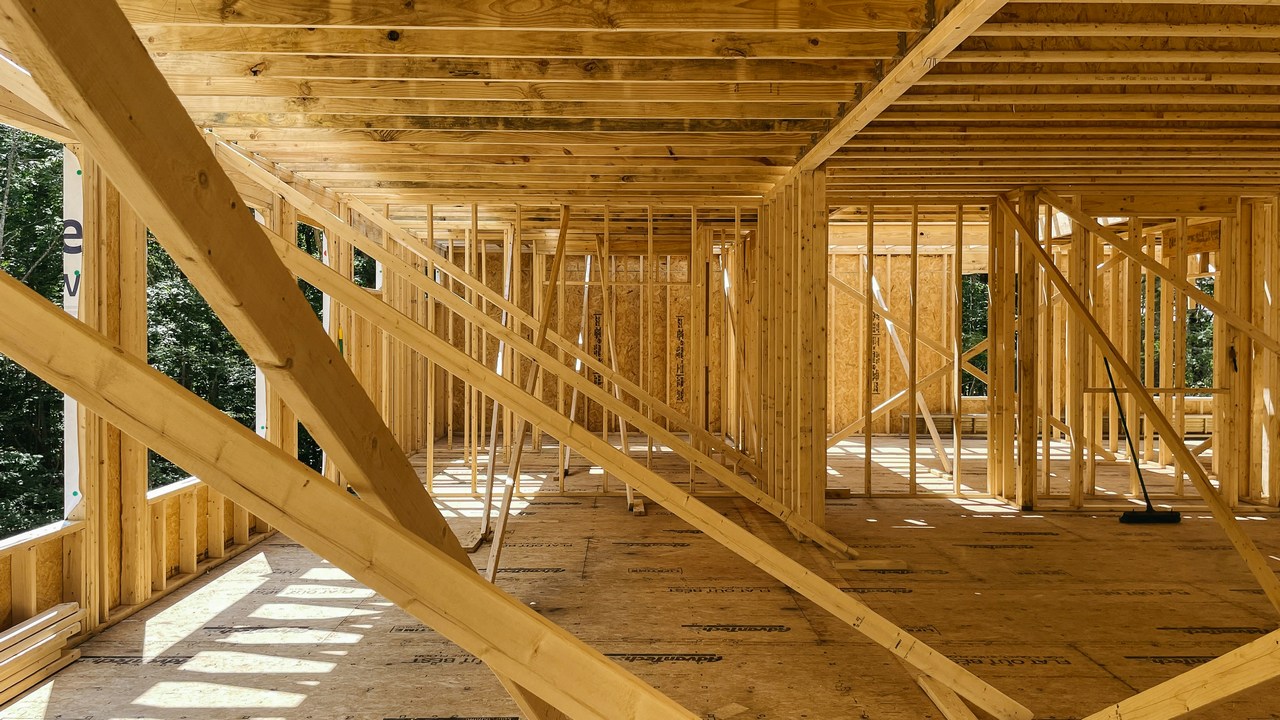
The VDC-to-field relationship is a system problem, not a people problem
The BIM-to-reality gap is often framed as a tension between VDC teams and field teams. In reality, it is usually a system gap: teams are working toward different definitions of completion, with different incentives and different informational formats.
VDC teams’ successes are often measured by coordination milestones, clash status, and model deliverables. Field teams are assessed by the quality of production, adherence to the schedule, and problem avoidance. If the coordination system does not explicitly include buildability validation, field teams will experience coordinated models as “the office’s version of the project,” rather than as an execution asset.
Closing the gap requires aligning definitions. A model is not “done” when it is clash-free. It is closer to completed when the most critical areas have been validated for constructability, sequence, access, and tolerance risk, and when assumptions are tracked and visible rather than buried in the design.
The tool isn’t the problem. The definition of “done” is the problem. If “done” means “no clashes,” the field keeps paying for what didn’t get checked.
What “good” looks like when the gap is closing
Projects that close the BIM-to-reality gap tend to display the same practical outcomes. RFIs still exist, but fewer are driven by coordination failures. Field conflicts still occur, but they manifest around true unknowns rather than predictable coordination misses. The above-ceiling work progresses with fewer stop-and-start moments. Prefabrication has fewer “field retrofit” events. Leadership sees less schedule volatility coming from MEP and interiors.
Most importantly, trust between VDC and field teams improves. When field teams consistently see that coordination outputs are buildable, they use them. When they use them, feedback improves. When feedback improves, the model reflects reality more quickly. The process morphs into a constructive feedback loop rather than an abrupt handoff.
That loop is what BIM was always supposed to be.
You’ll know it’s working when the field stops saying, “The model doesn’t match,” and starts saying, “That set helped us install it.”
Conclusion: buildability is the metric, not model perfection
The goal of BIM coordination is not to produce a perfect digital artifact. The goal is to produce coordination that crews can build from, under real constraints, without constant improvisation. Accomplishing this goal requires treating the model as a tool that must be translated into jobsite reality, not as a finished product to which reality must always conform.
Clash detection remains an essential part of that process, but it does not represent completion in and of itself. The finish line is buildability: verified clearances, realistic sequence, explicit assumptions, and field-usable outputs in the areas where the job is most likely to bleed time and money.
When coordination is evaluated that way, the gap narrows. The job runs smoother. And the model starts doing what it was supposed to do from the beginning: prevent problems before they spiral into field emergencies.
Coordination you can build from doesn’t require modeling everything. It requires modeling what matters, tracking what’s uncertain, and spending coordination time like it’s real money—because it is.
CONTACT US if you would like to talk about this with us.