
BIM has been around long enough that the conversation should be settled. It is not. In many contractor environments, BIM still lives in one of two boxes: it is either treated as a high-end capability reserved for massive projects, or it is treated as an overhead expense that produces impressive visuals but limited field value.
Both interpretations are expensive.
BIM is not valuable because it is digital. It is valuable because it makes coordination more predictable. Predictability protects margins. It reduces rework, stabilizes schedules, and improves the quality of decisions when the project still has room to adjust. When BIM is misunderstood, contractors either avoid it entirely or apply it in a way that guarantees disappointment, then conclude it “doesn’t work.”
The fastest way to get BIM value is not to buy more software. It is to stop believing the myths that prevent teams from using BIM as a practical coordination tool. The myths below show up across GCs and specialty contractors, and they tend to create the same outcomes: late-stage conflicts, unclear scope, excessive RFIs, and field improvisation that eats labor hours.
Myth #1: BIM is only for huge, hundred-million-dollar projects
This myth survives because BIM is often introduced at the “big job” level first. Large projects have more stakeholders, more complexity, and more budget flexibility for preconstruction coordination. That makes BIM easier to justify on paper. The mistake is assuming the economics only work at that scale.
Mid-sized projects still experience the same high-cost failures: congested ceiling spaces, conflicting penetrations, schedule compression, and scope gaps between trades. The difference is that mid-sized projects often have less buffer. When rework hits, the margin damage can be proportionally worse.
BIM value is not driven only by project size; it is driven by risk concentration. A smaller project with tight plenum space, aggressive schedule, or heavy prefabrication can justify coordination investment quickly because the cost of a single late clash can exceed the cost of early coordination.
Illustrative example: A mid-sized medical office build includes dense MEP above ceilings, strict inspection requirements, and limited access once finishes begin. The project is not “mega,” but the risk is high. Targeted BIM coordination in the most congested zones prevents late reroutes and reduces overtime near close-in. The value comes from avoiding disruption, not from the project’s headline budget.
BIM does not need to be applied everywhere to be valuable on smaller jobs. It needs to be applied where the job is most likely to bleed time and money.
BIM isn’t a “big job” tool—it’s a “high-risk zone” tool. If the ceiling is packed, the schedule is tight, and everyone’s pretending it’ll “work out in the field,” the job is big enough for coordination.
Myth #2: BIM is just a glorified, over-complicated 3D model
This is one of the most common misunderstandings, and it usually comes from seeing BIM used as visualization rather than coordination. A model that looks impressive but is not tied to field decisions feels like expensive artwork.
BIM becomes valuable when it functions as a coordination process, not as a deliverable. That process includes: defining scope boundaries, modeling to a level that supports real coordination decisions, running clash detection with consistent rules, tracking issues to closure, validating constructability where needed, and translating model intent into field-usable information.
A 3D model can exist without any of that. BIM, properly used, requires it.
Illustrative example: Two projects both “have BIM.” On one job, the model exists primarily to generate renderings and general coordination views, and clash detection is sporadic. On the other job, the model is used to manage penetrations, define hanger strategies in congested areas, coordinate prefabrication releases, and produce field installation views for critical zones. Both projects have a 3D model. Only one is using BIM as a coordination discipline.
Contractors who have only seen BIM used for visualization are not wrong to be skeptical. The solution is not to abandon BIM; it is to align BIM with buildability outcomes.
If BIM is only making pretty pictures, it’s not BIM—it’s a rendering budget. The model doesn’t have to include every nut and bolt, but it does have to be accurate where decisions get made. If it isn’t accurate, it’s just a confident-looking guess.
Myth #3: BIM always slows down the job
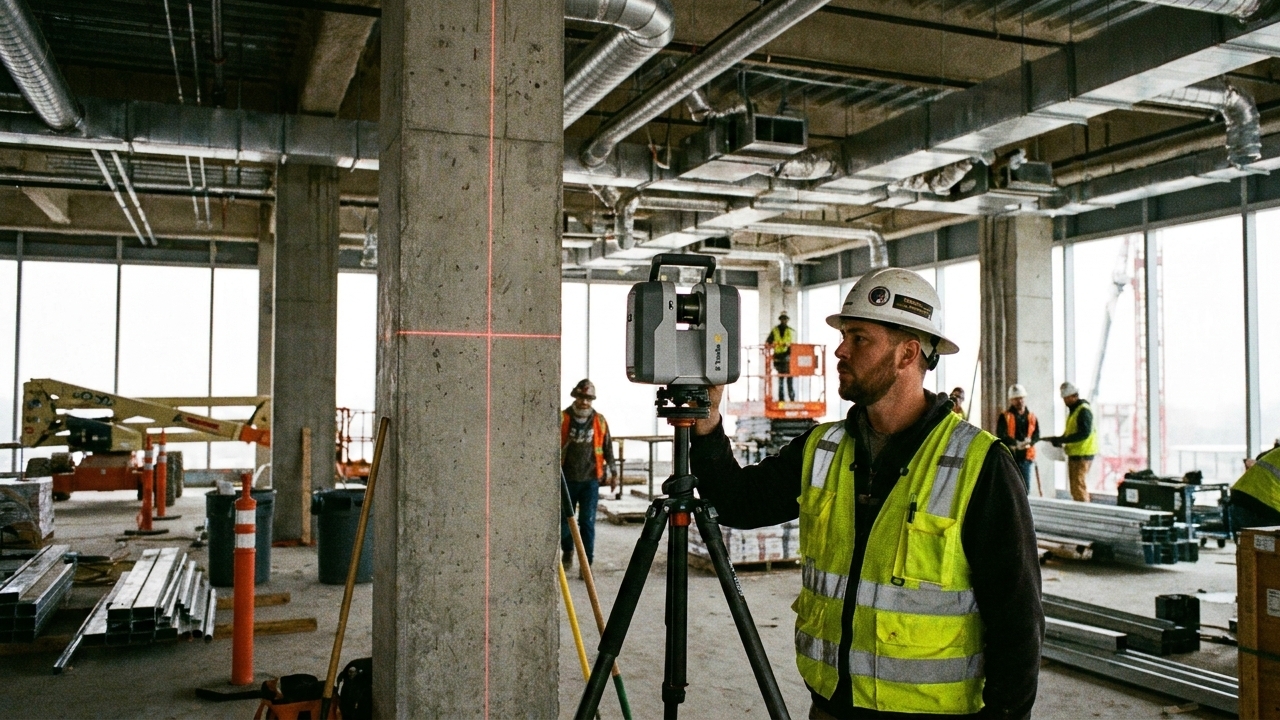
BIM can slow a job down if it is introduced as an extra layer of process without clear scope, clear gates, and clear outputs. That is not a BIM flaw; that is an implementation flaw. Poor coordination meetings waste time, whether they are digital or not.
When BIM is implemented well, the goal is not to add meetings. The goal is to remove late surprises. That often increases speed overall because the job spends less time stopping and restarting work due to conflicts.
The schedule impact of BIM is therefore timing-dependent. BIM adds effort early. It reduces disruption later. The real question is whether the project can afford the later disruption.
Projects that claim BIM “slowed everything down” often experienced one of these issues: trade engagement started too late, modeling detail was misaligned with the decisions needed, clash lists were not triaged effectively, or issue ownership and closure discipline were weak. In that environment, BIM becomes another task rather than a tool that reduces friction.
Illustrative example: A contractor adds BIM coordination late in preconstruction without adjusting decision deadlines. The team runs clash detection but generates a large list with no prioritization and no closure rules. Meetings become long and repetitive. Field leaders see no improvement and view BIM as overhead. In a different project, the contractor uses BIM primarily for high-risk zones, sets clear coordination gates tied to procurement and close-in milestones, and manages clash issues with consistent ownership and deadlines. That job experiences fewer late-stage conflicts, fewer RFIs, and less overtime during close-in. The early effort pays back as schedule stability.
BIM does not inherently slow construction. Unstructured coordination slows construction.
BIM only “slows the job down” when the process is sloppy and the scope is fuzzy. Also—if this is a hard-bid job, don’t sell coordination like it’s four months of effort and then act surprised when the team is still coordinating ten months later. Define the coordination duration up front, tie it to milestones, and if the timeline doubles, the compensation needs to follow reality.
Myth #4: Clash detection is enough to be “coordinated”
Clash detection is important, but it is not the finish line. A clash-free model can still fail in the field because buildability includes more than geometry.
Clash detection confirms that modeled elements do not occupy the same space. It does not confirm that crews can install the work safely and efficiently. It does not confirm that hanger strategies are feasible, that access is adequate, that insulation and bracing have room, or that the installation sequence is realistic. It does not resolve scope boundaries around openings, supports, sleeves, and firestopping.
This is one reason late-stage clashes and field conflicts still occur on “coordinated” jobs. The model may be clash-free, but the project has not validated constructability.
Illustrative example: A corridor plenum is clash-free, but the duct run leaves no practical room for hanger installation once other systems are in place. The field ends up modifying supports and shifting work sequence to make it installable. The model was not technically wrong. The coordination process was incomplete because it equated “no collisions” with “buildable.”
True coordination treats clash detection as a diagnostic step, not a completion certificate. It pairs clash management with constructability validation in the zones where install risk is highest.
Clash detection is a tool, not a trophy. We waste ridiculous time chasing clashes that will never matter in the field. Example: underground conduit “clashing” with cast-in-place footings—if the footings go in first, that’s not a clash problem, that’s a sequencing and layout problem. Focus on clashes that actually create rework: close-in zones, supports, access, real clearances, and install sequence.
Myth #5: BIM is the GC’s job, not the trades’ job
This myth shows up in different forms. Some trade contractors assume the GC will coordinate and hand them a clean plan. Some GCs assume trades will coordinate among themselves. Both assumptions create gaps.
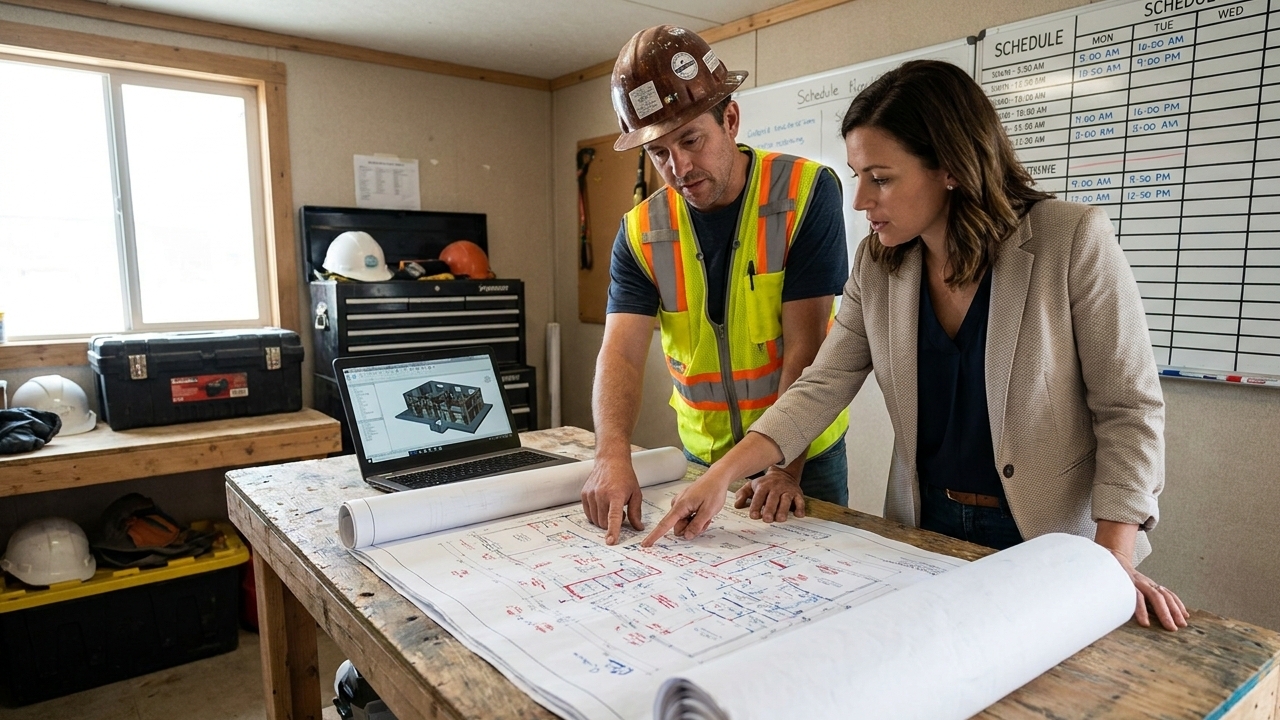
MEP coordination is most effective when trade contractors are actively engaged, because the trades own the means and methods of installation. They understand their systems, their fabrication constraints, and their field sequencing better than anyone else. The GC often owns the coordination framework and accountability, but the trades own much of the technical decision-making required to make systems install cleanly.
When trade involvement is late or uneven, coordination becomes guesswork. The model fills in assumptions that will be invalidated later, and those invalidations appear in the field as late-stage conflicts and rework.
Illustrative example: A GC runs coordination using partial trade inputs. Some trades model to high detail, others model conceptually, and several key decisions are deferred. The model appears coordinated at a high level, but field conflicts emerge because the real installation details were never locked. In a stronger workflow, trade partners engage early with clear expectations for scope, level of detail, and decision timelines. The coordination effort is more focused, and fewer assumptions survive long enough to become field problems.
BIM is not “someone else’s job.” It is a shared discipline with defined ownership. The GC can set the structure, but the trades must contribute the expertise that makes coordination real.
If trades aren’t in coordination early, you’re not coordinating—you’re guessing. The GC can run the meeting, but trades own means and methods. If you model assumptions instead of trade decisions, the field will collect the bill.
What contractors should take from these myths
The practical takeaway is not that every contractor needs to become a BIM expert overnight. The takeaway is that BIM should be evaluated as a margin-protection tool, not as a technology trend.
The contractors who get value from BIM usually share a few behaviors. They target BIM effort where risk is concentrated. They treat coordination as a disciplined workflow with clear gates and clear ownership, not as a meeting series. They manage clashes to closure with consistent standards. They validate constructability where it matters instead of assuming clash-free equals buildable. They translate model intent into field-usable outputs rather than assuming model access equals field clarity.
Those behaviors are available to mid-sized contractors, not just national firms. They are also available to specialty contractors who want to bid with more confidence and reduce non-billable coordination churn.
The goal isn’t “doing BIM.” The goal is fewer surprises and cleaner installs. If BIM isn’t protecting margin, it’s overhead—and nobody should be shocked when the field treats it that way.
Conclusion: BIM myths cost money because they create predictable project failure patterns
BIM myths persist because they are often based on real experiences with poor implementation. A model that produces pretty visuals but no field value will feel like wasted money. Clash detection that generates noise without closure discipline will feel like a time sink. Coordination without trade engagement will feel like a dead end. Those experiences are real, and skepticism is understandable.
The cost comes when the conclusion becomes “BIM doesn’t work,” instead of “this workflow didn’t work.” BIM, used as a coordination discipline, is one of the most practical ways to reduce late-stage surprises, protect schedule, and defend margins. The myths keep contractors from using it that way, and the field ends up paying for the gap.
Most BIM failures aren’t software failures—they’re workflow failures. Tighten the scope, define the schedule, assign ownership, enforce closure, and stop burning hours on non-issues. Then BIM becomes something the field actually trusts.
CONTACT US if you would like to talk about this with us.